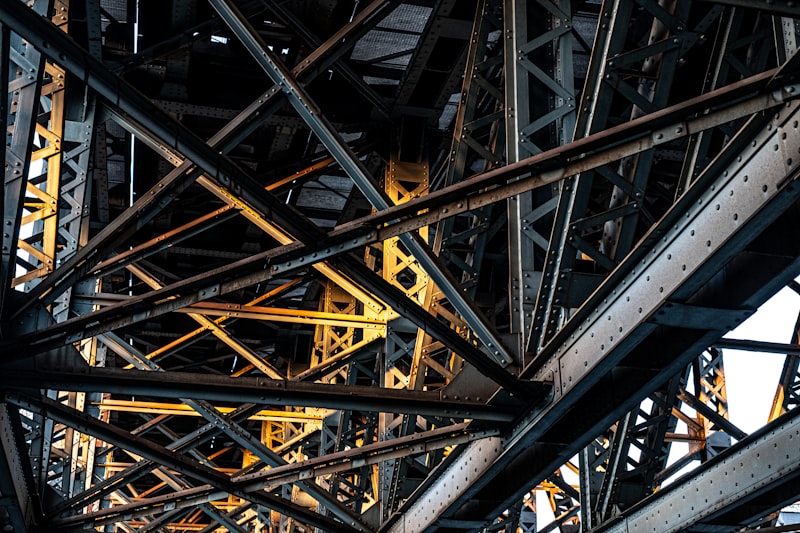
Tetarom Production Hall - Steel Structure and Frames
LOC: Cluj-Napoca
DUR: 12 saptamani
1
Provocare
Tetarom Industrial needed a 1,200sqm production hall with a 24-metre clear span, capable of supporting a 10-tonne overhead crane. The site had difficult geotechnical conditions, and the execution deadline was limited to 12 weeks to coincide with the delivery of production equipment.
2
Solutie
We opted for portal frames with tubular truss beams, reducing the structure weight by 30% compared to a hot-rolled profile solution. Design was carried out entirely in Tekla Structures, with automatic generation of fabrication drawings. Fabrication ran simultaneously with foundation works, gaining 3 weeks over a sequential approach.
3
Rezultat
The hall was completed one week ahead of schedule, allowing timely installation of production equipment. The structure passed all acceptance inspections, including the crane rail load test. The client reported a 15% saving compared to the competing bid, thanks to the optimised truss solution.
The Tetarom Industrial production hall was the largest structural project of 2024 for our team. With a 1,200sqm footprint and demanding technical requirements, the project required meticulous planning and flawless execution.
The structure consists of 8 trussed portal frames spaced at 6-metre intervals. The HEB 300 columns stand 8 metres tall, while the main beams are Warren trusses made from tubular sections with a depth of 1.8 metres and a span of 24 metres. This solution reduced the structural weight from 42 to 29 tonnes, with a direct impact on foundation size and overall cost.
To support the 10-tonne overhead crane, we designed a runway beam system using HEA 400 profiles mounted on brackets welded to the main columns, with end-stop and buffer systems at the limits of travel. The A55 crane rail was installed with an elastic fastening system to reduce vibrations transmitted to the structure.
The cladding consists of 80mm sandwich panels mounted on Z 200x2mm purlins, providing adequate thermal insulation and weatherproofing. The structure was protected against corrosion to class C3 standard through zinc metallisation and two coats of epoxy paint.