
Technical Articles
What Galvanising Means and Why It Matters
WeldyArt Admin
28 October 2025
5 min read
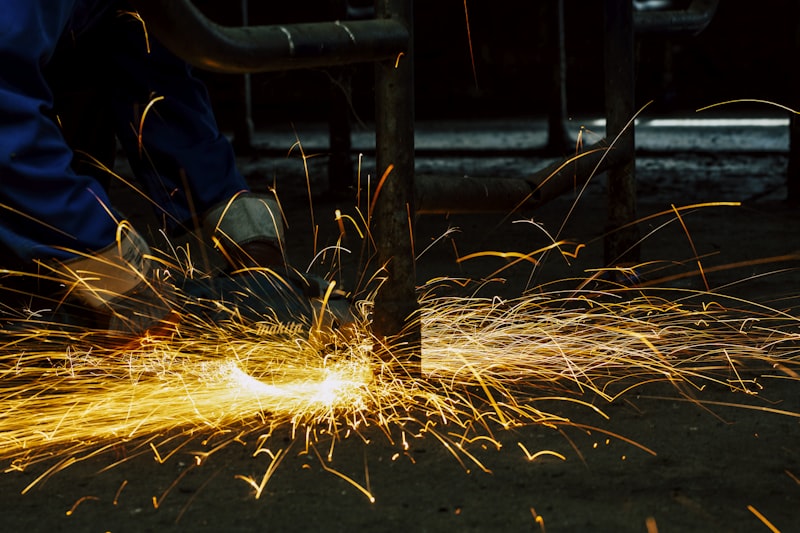
Hot-dip galvanising is one of the most effective anti-corrosion treatments for steel. Learn how it works, what it costs and when it is worth choosing for your metal project.
Hot-dip galvanising is the process by which steel components are immersed in a bath of molten zinc at approximately 450 degrees Celsius, forming an adherent and durable protective layer across the entire metal surface.
## How It Works
The hot-dip galvanising process involves several stages: degreasing with alkaline solutions, pickling in hydrochloric acid to remove rust and impurities, fluxing with zinc and ammonium chloride, and finally immersion in the zinc bath at 450 degrees Celsius for 3-10 minutes, depending on material thickness.
During immersion, the zinc reacts with the iron in the steel, forming successive layers of iron-zinc alloys, with a layer of pure zinc deposited on the exterior. The result is protection that works through two mechanisms: physical barrier and cathodic (galvanic) protection. Even if the zinc layer is scratched, the surrounding zinc will continue to protect the nearby steel.
## How Long Does Protection Last
Protection duration depends on the zinc layer thickness and environmental aggressiveness. In a rural environment, a standard 80-micron layer provides 40-50 years of protection. In an urban setting, this reduces to 25-35 years, and in industrial or marine environments, to 15-25 years. According to EN ISO 1461, the minimum coating thickness for pieces over 6mm thick is 70 microns.
## Galvanising vs. Powder Coating
These are two complementary treatments, not competing ones. Galvanising provides active cathodic protection and exceptional durability, but the aesthetic appearance is limited to metallic greys. Powder coating offers an infinite range of colours and finishes, but protection is strictly of the barrier type. The ideal solution is the duplex system: galvanising plus powder coating, which provides 2-3 times greater durability than the sum of the two treatments applied individually.
## When to Choose Galvanising
I recommend hot-dip galvanising for: fences and gates permanently exposed to weather, metal structures in high-humidity areas, welded assemblies with zones that are difficult to access for subsequent painting, and any component that needs to last over 20 years without major maintenance interventions.